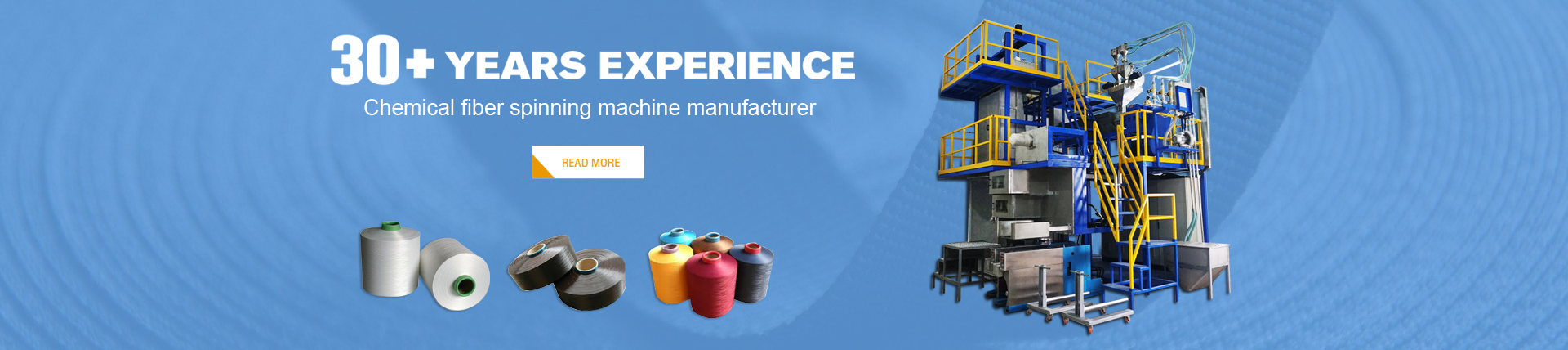
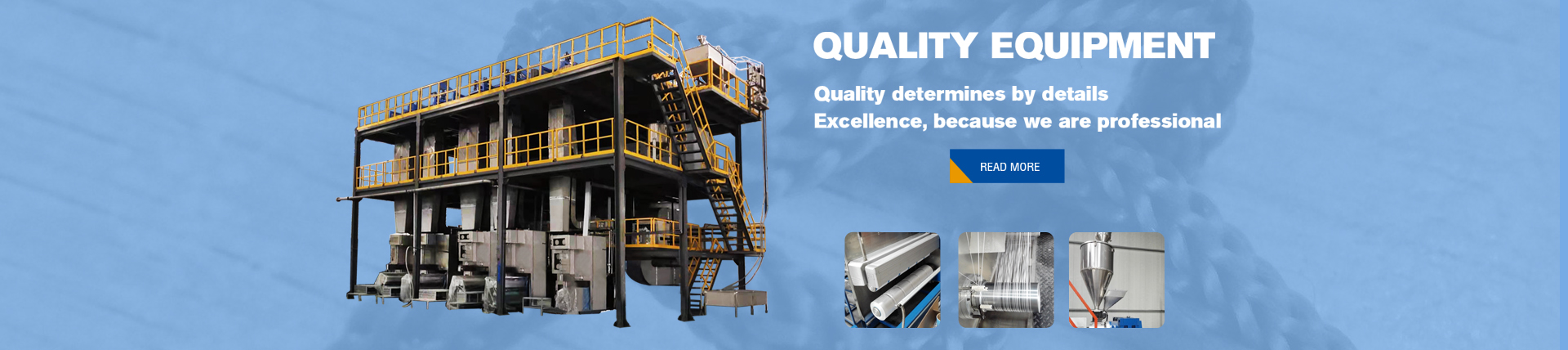
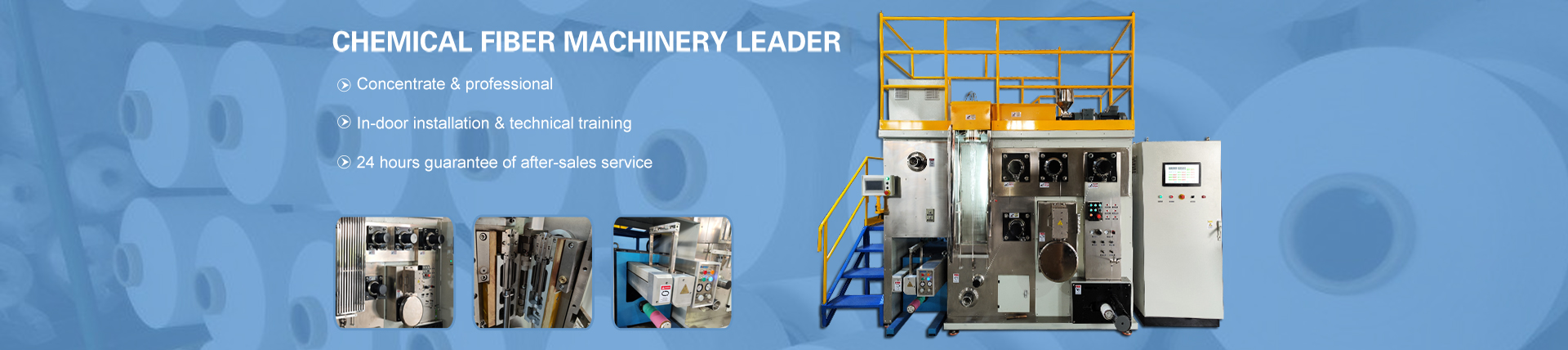

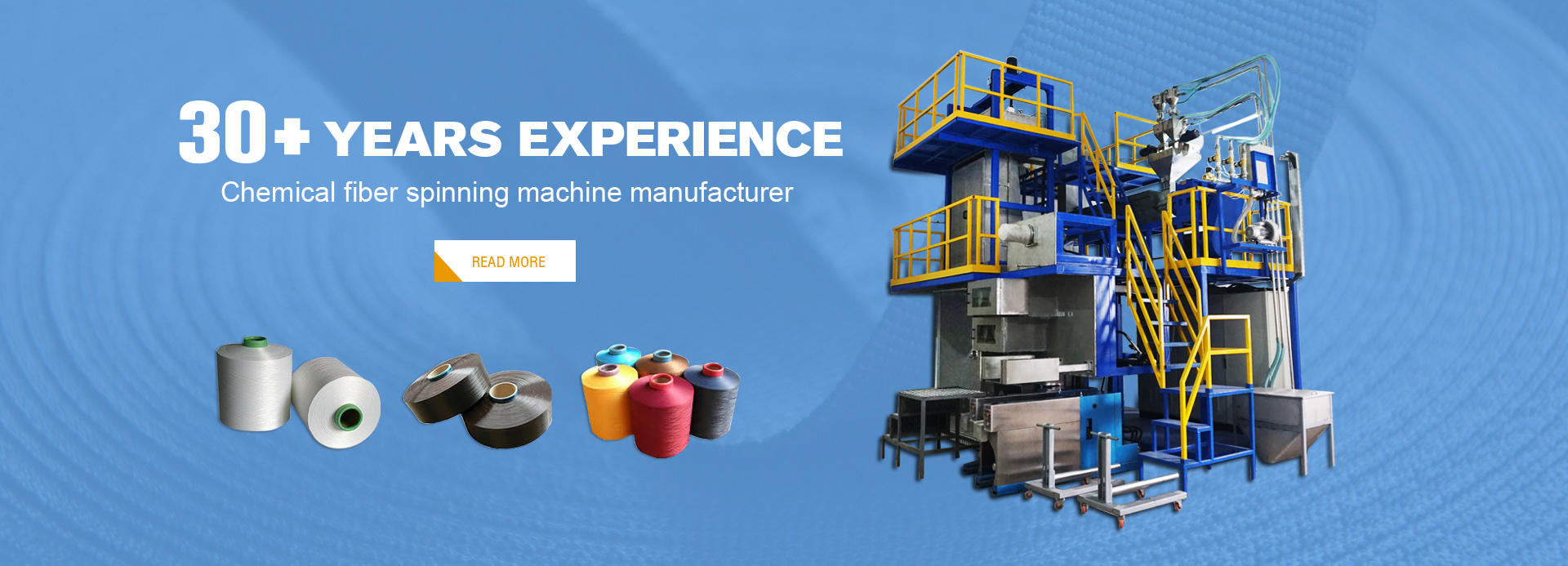
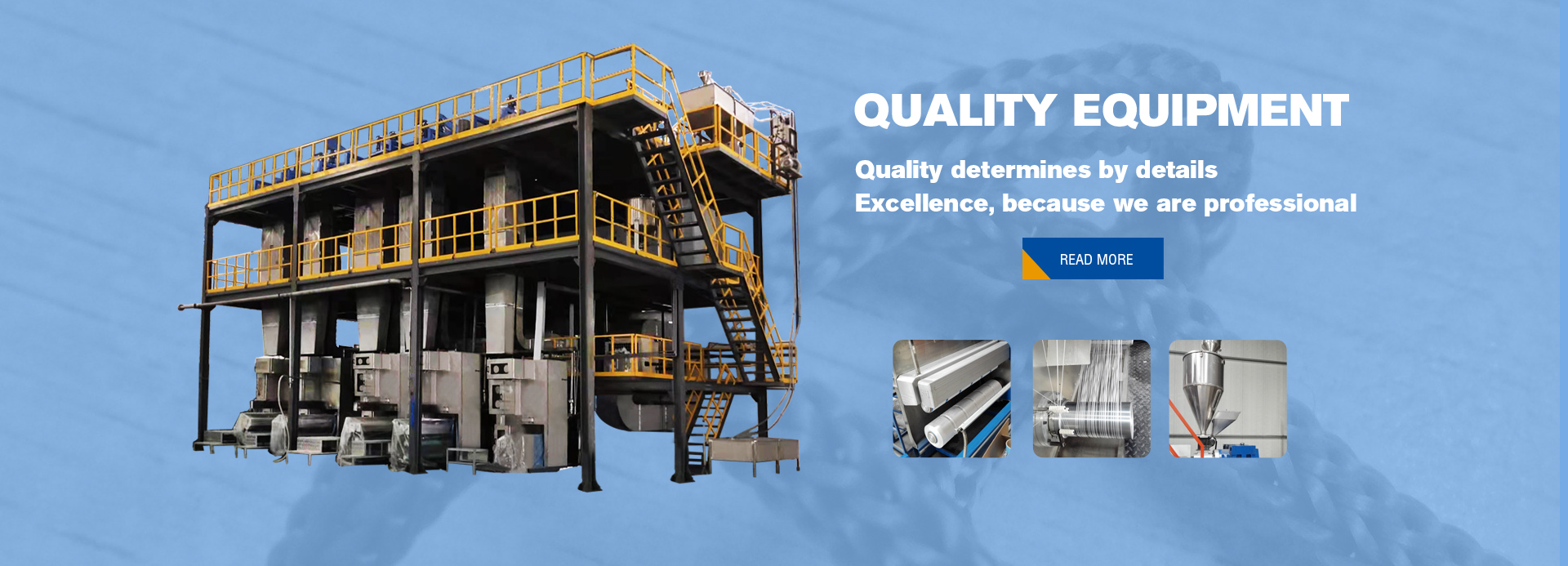
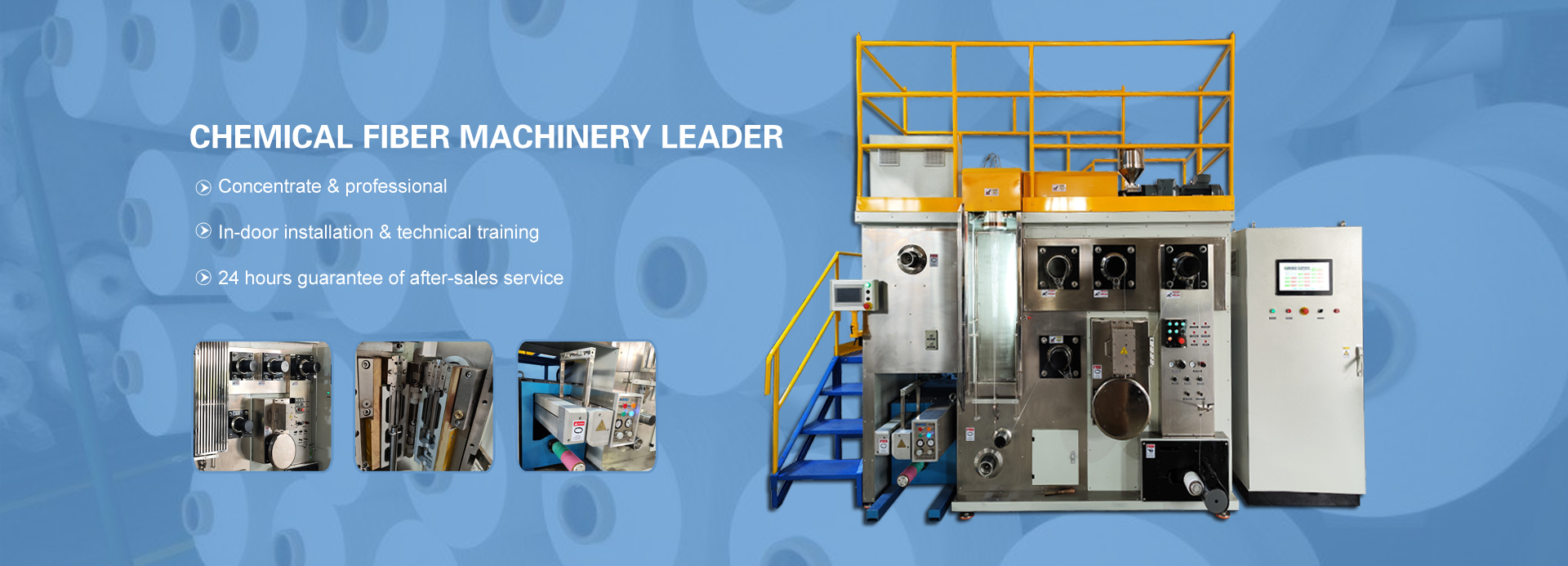
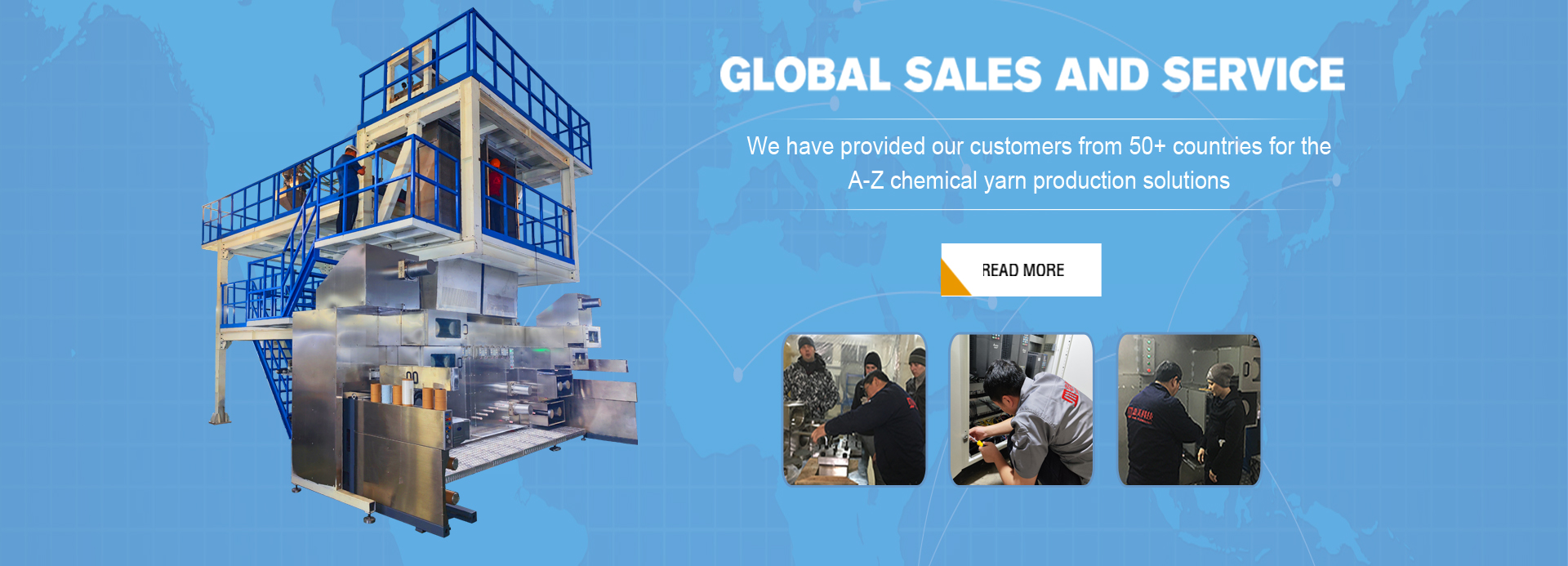
PP (polypropylene) fiber is widely used in nonwovens, geotextiles and home textiles — and the PP spinning machine — in practical terms a pp multifilament machine — is the core equipment that produces it. Many have seen the finished filament but not the logic inside the machine. This article breaks down the full journey from PP chips to continuous filament on a pp multifilament yarn produce line, and explains what each process stage means for final yarn quality and machine selection.
In one sentence: PP spinning is not chemistry — it is precise temperature control plus mechanical coordination that turns a high-viscosity PP melt into continuous filament. On a typical yarn spinning FDY line, a steady screw drives the melt forward; heater bands hold a temperature gradient; a metering pump feeds it at a fixed rate; a micron-level spinneret forms the filaments; cooling solidifies them; an oiling system bundles them; multi-stage drawing imparts strength; and finally winding builds the package.
Pelletized PP feedstock enters the hopper and is melted by the screw extrusion system. As the screw turns, shear and heat conduction gradually melt the solid pellets into a homogeneous melt; melt temperature and pressure must be kept stable, as they directly determine the quality of the filament formed downstream.
At the front of the machine, the extruder pushes material forward at a steady screw speed; heater bands along the barrel hold a differentiated temperature gradient so the polymer melt gains uniform flowability. The metering pump acts as a metronome: gear meshing delivers the melt to the spinning pack at a fixed rate and pressure.
| Key stage | What it does | Why it matters to buyers |
|---|---|---|
| Screw extrusion | Solid pellets → homogeneous melt | Melt homogeneity decides whether spinning stays stable; screw design and temperature control are core machine specs |
| Heater gradient | Differentiated temperature control per zone | Unstable gradient → fluctuating melt flow → uneven denier, higher breakage |
| Metering pump | Fixed-rate, fixed-pressure feed | Metering accuracy directly sets denier consistency and monofilament uniformity |
The spinneret in the spinning pack is the component that shows true precision. Its micro-holes are often measured in microns; under high pressure the melt is extruded through these fine orifices into liquid streams, and at that instant the polymer molecular chains begin to orient.
| Metric | Why it matters |
|---|---|
| Hole-diameter uniformity | Sets monofilament denier consistency; large deviation → breaks, uneven yarn |
| Plate finish / material | Affects smooth extrusion and service life |
| High-pressure stability | Pressure fluctuation → varying filament thickness |
Why it matters to buyers: the spinneret is not an ordinary part — it is the precision component that decides yarn consistency. When selecting a line, treat hole-machining accuracy, material and maintainability as acceptance criteria.
The cooling blower then quenches the tow at a set wind speed and angle, gradually solidifying the liquid streams into solid as-spun fiber. Cooling uniformity directly affects how consistently the tow solidifies, which in turn governs downstream drawing stability.
Why it matters to buyers: uniform, controllable cooling air (temperature, speed, direction) is the prerequisite for even yarn evenness; the machine should provide a stable, adjustable cooling system.
The oiling roller then gives the tow proper cohesion and smoothness, reducing friction damage during later drawing. Oiling uniformity affects the friction coefficient, antistatic behavior and the hand / strength of the final yarn.
Why it matters to buyers: the oiling system (finish formulation + application) affects downstream process smoothness and final quality — an often-overlooked but critical configuration point.
The machine's vertical layout forms the path from melting, extrusion to cooling, using gravity to help the tow descend and reserving ample deformation space for drawing. The draw-roll sets operate at progressive speed ratios, applying tensile force to the solidified tow so the molecular chains straighten and pack in order — imparting the fiber's tenacity and elongation.
Why it matters to buyers: draw ratio and stability directly decide the final filament's tenacity and elongation. This is exactly the stage behind last issue's "industrial high-tenacity yarn" — push the draw ratio higher and control it tighter, and the same family of spinning line yields high-tenacity industrial yarn. (See this issue's explainer, "What Is Industrial High-Tenacity Yarn?")
The winder uses a traverse guide to lay the high-speed filament evenly onto a paper tube, forming a package ready for downstream weaving. Package quality (uniform hardness, flat edges) directly affects unwinding efficiency and weaving stability.
Every stage of the PP spinning process maps to a key machine component and an adjustable parameter:
Melt homogeneity (screw + heater + pump) → can you spin stably?
Spinneret precision → denier consistency and breakage
Cooling uniformity → yarn evenness
Oiling & bundling → downstream smoothness and quality
Drawing stability → tenacity and elongation
Winding quality → downstream unwinding efficiency
For buyers, selecting a line should not stop at "capacity numbers." The precision of these components and the stability they can hold are the real dimensions to accept and compare on — and the main source of price differences between spinning lines.
Technical Support: 

 English
 русский